[Update 3/30/26] - I got back the rights to this course so I can set whatever price I want...
Price has now gone from $55 → $30 (now also included with Genie)
The Time to Learn Geometry Nodes is NOW...
Introduction to Geometry Nodes is the ultimate course for beginners. No prior experience, advanced math, or even familiarity with nodes necessary. Gain the powers of proceduralism in just 5.5 hours!
Chapter 0 - Intro
Chapter 1 - Fractals
Chapter 2 - Animation
Chapter 3 - Fields
Chapter 4 - Points
Chapter 5 - Outro
✕
Chapter 0 - Meet The Instructor (2 min)
Part 1: Introduction (2 min)
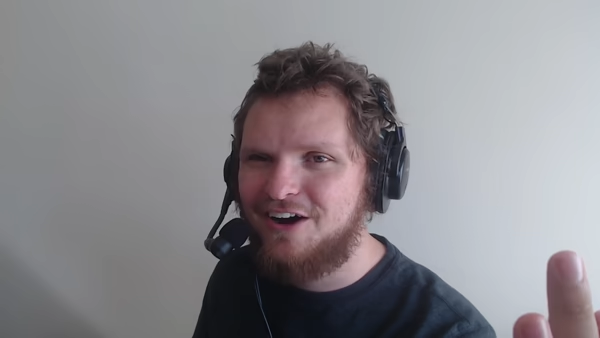
Introduce the instructor and the goals of the course.
✕
Chapter 1 - Building Up To A Fractal (46 min)
Part 1: Setting up (5 min)
Accessing geometry nodes and some quality of life adjustments before diving in.
Part 2: What are geometry nodes (7 min)
Thinking of geometry nodes as a nodegroup in the modifier stack. Creating custom modifiers with nodes.
Part 3: Right to the fractal (34 min)
Creating a Menger Sponge (2D analog) with cube primitive, transform geometry, and join nodes. Complexity arising from chaining instanced node groups.
Becoming familiar with the scene time and math nodes.
Part 2: Basic animations (26 min)
Animating by using scene time as a vector component. No keyframes required.
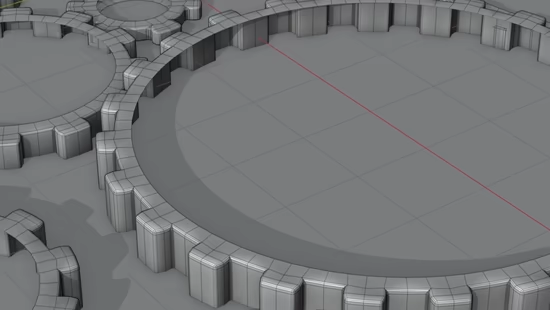
Part 3: Assembling gear systems (20 min)
Adding complexity to basic animations. Using interpolation functions and custom parameters for accurate gear-to-gear contact.
Part 4: Clocks with real-world time (52 min)
Creating a fully usable clock with custom models and stylized motion. The ultimate test of what we learned in this chapter.
✕
Chapter 3 - Making Snow & Terrains With Fields (1 hour 16 min)
Part 1: Terrains via height maps (33 min)
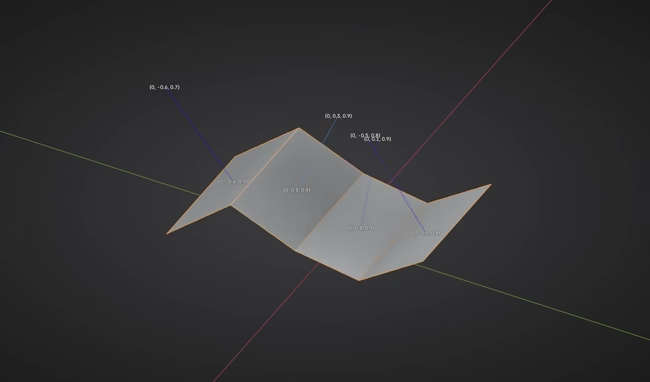
Treating geometry as a means to store and update field information. Modifying the position field via set position to create procedural terrains.
Part 2: Snow via point clouds (43 min)
Thinking of point clouds as basic position + radius visualizers. Using “Pac-Man portals” for a blazingly efficient neverending snowfall.
✕
Chapter 4 - Points For Fur & FX (1 hour 32 min)
Part 1: Fur and the point-instance workflow (51 min)
Using distribute points on faces as a means to capture surface information. Instancing objects on points with normal orientations and random attributes.
Part 2: Object morphing FX (41 min)
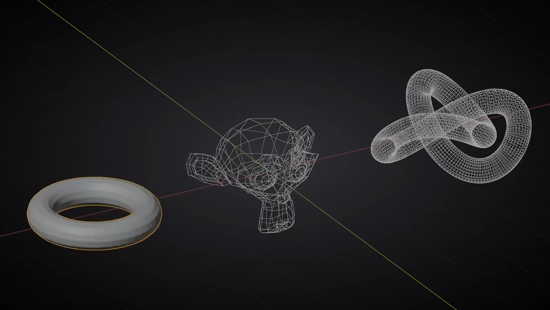
Sampling a field from one object to apply to another. Sampling corresponding positions from pairs of points to create a seamless morphing effect. Bonus sneak peek into volumes and remeshing.
✕
Chapter 5 - Where To Go From Here (6 min)
Part 1: Outro (6 min)
Overview of what we've covered and tips for going further.
Project Files & Hotkey Cheatsheet
While I believe it's best to work alongside the videos, project files are included anyways. These are highly organized networks (optimized for legibility) and come with some extra goodies :)
If you can't read these networks yet... by the end of the course you will!
*this is a high-level overview of the fractal network
*this is a high-level overview of the snow network
And since I thought of everything - a cheatsheet of all the hotkeys we'll be using is included.
Course Structure
Chapter 0 - Meet The Instructor (2 min)
Part 1: Introduction (2 min)
Introduce the instructor and the goals of the course.
Chapter 1 - Building Up To A Fractal (46 min)
Part 1: Setting up (5 min)
Accessing geometry nodes and some quality of life adjustments before diving in.
Part 2: What are geometry nodes (7 min)
Thinking of geometry nodes as a nodegroup in the modifier stack. Creating custom modifiers with nodes.
Part 3: Right to the fractal (34 min)
Creating a Menger Sponge (2D analog) with cube primitive, transform geometry, and join nodes. Complexity arising from chaining instanced node groups.
Becoming familiar with the scene time and math nodes.
Part 2: Basic animations (26 min)
Animating by using scene time as a vector component. No keyframes required.
Part 3: Assembling gear systems (20 min)
Adding complexity to basic animations. Using interpolation functions and custom parameters for accurate gear-to-gear contact.
Part 4: Clocks with real-world time (52 min)
Creating a fully usable clock with custom models and stylized motion. The ultimate test of what we learned in this chapter.
Chapter 3 - Making Snow & Terrains With Fields (1 hour 16 min)
Part 1: Terrains via height maps (33 min)
Treating geometry as a means to store and update field information. Modifying the position field via set position to create procedural terrains.
Part 2: Snow via point clouds (43 min)
Thinking of point clouds as basic position + radius visualizers. Using “Pac-Man portals” for a blazingly efficient neverending snowfall.
Chapter 4 - Points For Fur & FX (1 hour 32 min)
Part 1: Fur and the point-instance workflow (51 min)
Using distribute points on faces as a means to capture surface information. Instancing objects on points with normal orientations and random attributes.
Part 2: Object morphing FX (41 min)
Sampling a field from one object to apply to another. Sampling corresponding positions from pairs of points to create a seamless morphing effect. Bonus sneak peek into volumes and remeshing.
Chapter 5 - Where To Go From Here (6 min)
Part 1: Outro (6 min)
Overview of what we've covered and tips for going further.






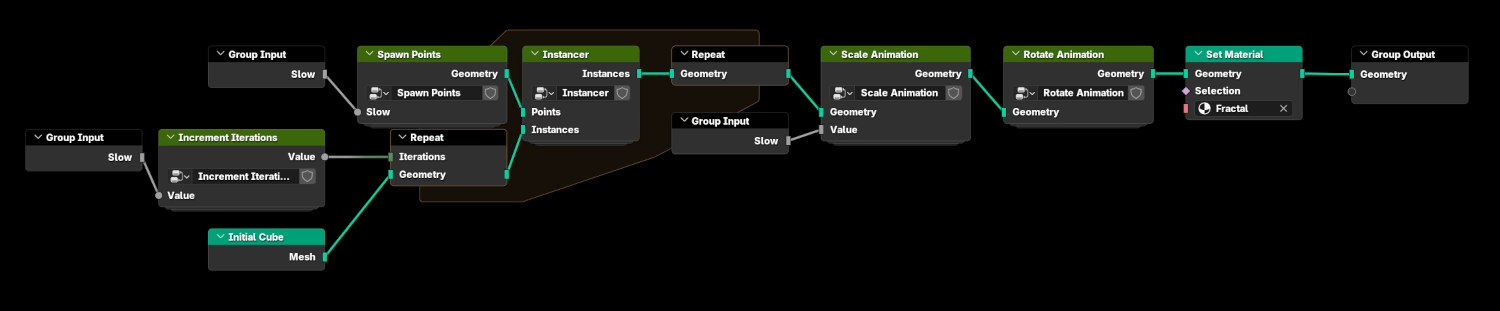 *this is a high-level overview of the fractal network
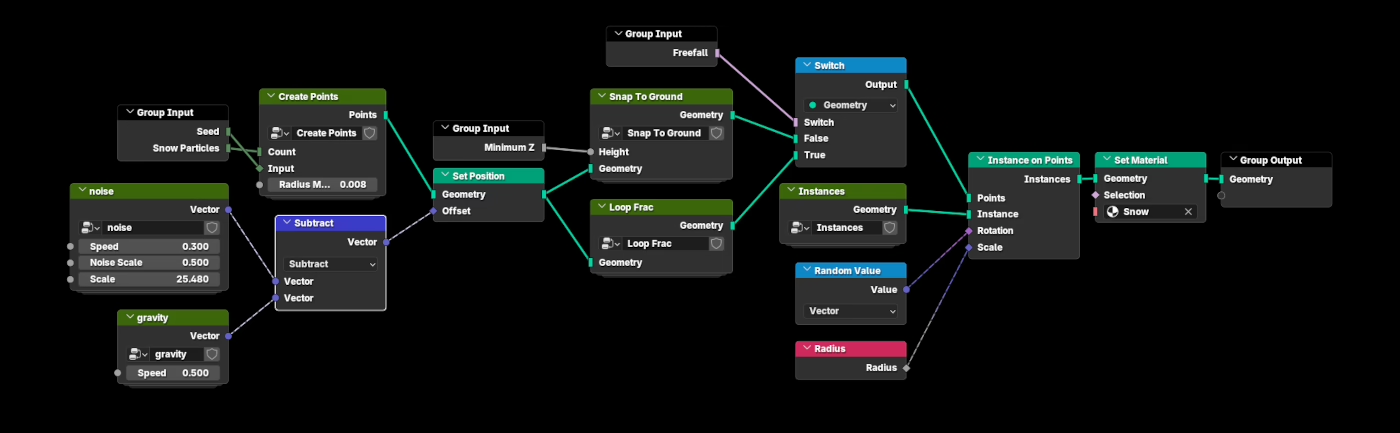 *this is a high-level overview of the snow network